
Tithe comes from the Latin word decimus and is linked to a tenth (a tenth of something). The concept was used to name the right of 10% that a king demanded on the value of the merchandise that entered his kingdom or that were trafficked from his ports.
The notion of a tithe, therefore, is usually associated with a 10 % tax that had to be paid to a king, a ruler or a religious leader. Those who had to make the payment delivered a tenth of their profits or income to the creditor.
The tithe is called the economic contribution made by the faithful for the operation of a church.
History and present of the tithe
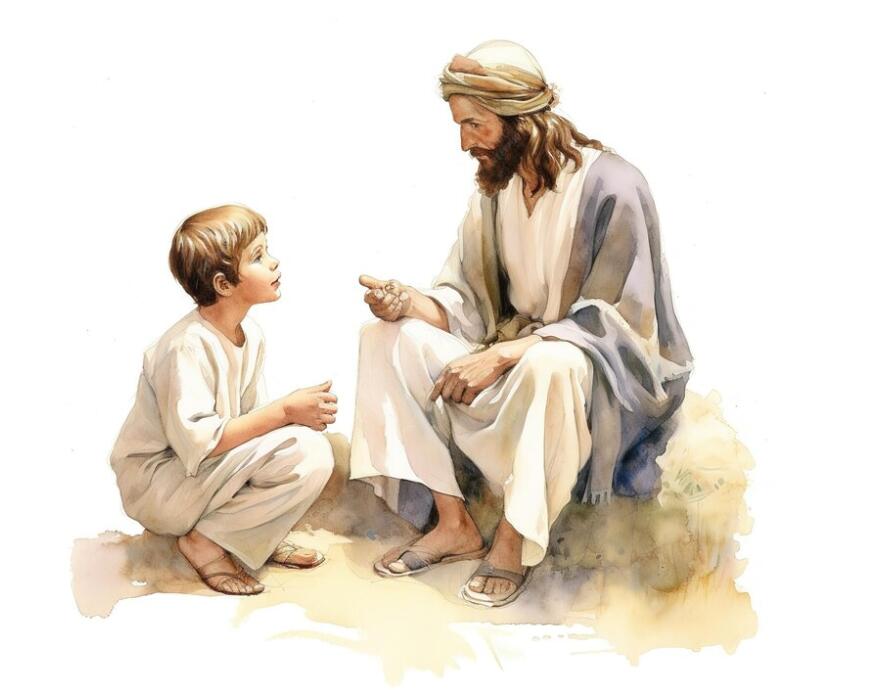
The tithe dates back to biblical times. The patriarch Abram, who would later become Abraham ( “father of many peoples” ), gave a tithe to the priest Melchizedek in a show of gratitude. In time, the tithe was instructed for all Levitical priests and was even established as an obligation or law.
Currently, the tithe is usually optional in religion, although various branches (such as evangelists ) insist on the importance of the faithful keeping a part of their income to contribute to the church. The tithe is usually considered as a responsibility before God since it helps to spread his word in the world.
The idea of a tithe can be associated with a contribution or a tax.
The importance of being part
Even from a non-religious point of view, the importance of the tithe does not lie precisely in the amount of money with which one collaborates, but in the fact of feeling part of a movement, of a community, in the satisfaction of knowing oneself a fundamental member for its continuity and development. In fact, the tithe does not always represent exactly 10% of income, and in many cases the term is used simply as a synonym for donation or offering.
Many say that when we learn to share what we get with others, even when we do it with people and animals we do not know and will never know, we feel closer to others and to ourselves. Despite the fact that a person earns his money without anyone’s help, with a lot of effort and without exceeding the limits of the Law, the only way to enjoy it is not necessarily to allocate it to himself: sometimes, helping to improve the world around you can give back much more than it gives.
The tithe, in general, was intended to raise funds for the material maintenance of the Church and its ministers. The contribution of the faithful, therefore, was not always destined for the most needy, but rather to maintain a power structure and an ecclesiastical hierarchy.
Ecological Tithe Law
While the energy passes through the different trophic levels (of nutrition), much of it is lost in the respiratory process. This occurs because of the second law of thermodynamics, since there is a significant loss of energy in each transfer, and this is called the Law of Ecological Tithe or Law of Ten Percent.
When the laws of thermodynamics were applied to the flow of matter and energy, as well as to the formation of biomass, it was determined that only 10% of the energy generated in the previous one is obtained in the passage between the trophic levels; In other words, of the energy that is captured at each trophic level, 90% goes to movement, metabolism, and other actions, while leaving the remaining 10% for the next to take advantage of.
Taking food as an example, we can say that a plant takes advantage of 90% of the energy it obtains from the sun to develop and when a herbivorous animal uses it to feed itself, it can only access the remaining 10% (the tithe) of which, at its Once, 90% will serve you for your vital functions; if a carnivorous animal feeds on the latter, then the same thing will happen once again.
List of Acronyms Related to Tithe
| Acronym | Meaning |
| ATD | Antitheft Device |
| CTOF | Chapel Tithes and Offering Fund |
| FPA | Foros Prostithemenis Axias |
