Introduction
The development of computers, increasingly fast and efficient is a constant need. With regard to the segment of computers personal, this need for evolution is encouraged mainly by applications such as games, videos high-definition and broadband Internet. With regard the graphic areas, the advances are amazing, however require and generate a greater volume of data. To deal with this reality, one of the measures of the industry was the creation bus PCI Express, the replacement for PCI buses (Peripheral Component Interconnect) and AGP (Accelerated Graphics Port) – learn more about these technologies in this link. The purpose of this article is to show the main features this technology, in addition to some of its technical details, so that you can know its benefits and the the reasons for your adoption.
PCI Express technology
The PCI standard came about in the early 1990s and, for more than 10 years, was the bus used for the connection device to the computer, particularly video cards, sound cards, network cards and modem cards. The PCI bus works with 32 bits at a time at data transfer (but there are some PCI slots, that work on 64-bit), which allows the standard to achieve speed (theoretical) up to 132 MB per second.
As the applications in 3D require, increasingly, rates of transfers the largest, the AGP bus has entered the market, offering speeds that will of 266 MB per second (on the standard AGP 1X) 2128 MB per second (on the standard AGP 8X). Virtually all motherboards with support for AGP only have a slot of this type, since this standard is used exclusively for video cards.
The problem is that, even offering speeds above 2 GB for second, the industry realized that the AGP slot 8X does not support the advances in graphics applications, not only by limitations in the rate of transfer data, but also by the use of the resources that the technology does not supports. Still, it is necessary to consider that, despite the GPA to take advantage of a fairly reasonable, its use is intended only to video applications. It happens that applications audio and network, for example, also evolve.
In search of a solution to these problems, the industry technology worked (and works) on the PCI Express bus, whose name was the initial 3GIO. This is a standard that provides high rates of data transfer between the computer itself and a device – for example, between the motherboard and a card 3D video.
The PCI Express technology has a feature that allows the use of a or more serial connections, that is, “ways” (also called lanes) for data transfer. If a particular the device uses a path, then it is said that this uses the bus PCI Express 1X. If you use 4 connections, its name is PCI Express 4X, and so on. Each lane can be bi-directional, or, you can send and receive data.
Each connection used in the PCI Express works with 8 bits at a time, being 4 bits in each direction. The frequency used is 2.5 GHz, but this value can vary. Thus, the PCI Express 1X can work with rates of around 250 MB per second, a value much louder than the 132 MB of the PCI standard.
Currently, the PCI Express standard works with up to 16X, the equivalent of 4000 MB per second. Possibly, with the passing of time, this limit will increase. It is already known, including the implementation a bus with 32-bit is possible.
It is important to stress that the default 1X is little used and, because of this, there are companies that call the PCI-Express 2X PCI Express 1X. Thus, the standard PCI-Express 1X can represent also, data transfer rates of 500 MB per second.
How did the PCI Express
Intel is one of the great precursors of innovations technological. At the beginning of 2001, in an event itself, the company showed the need for the creation of a technology able to replace the PCI standard: it was the 3GIO (Third Generation I/O – 3rd generation Input and Output). In August of the same year, a group of companies called the PCI-SIG (consisting of companies such as IBM, AMD, and Microsoft) approved the first specifications of the 3GIO.
Among the issues raised in these specifications, are the following: support to the PCI bus, the possibility of use of more a lane, support other connection types, platforms, better power management, increased protection against errors.
In April 2002, the PCI-SIG approved a set of specifications the most complete. It was at this time that the technology 3GIO changed its name for PCI Express. In July 2002, the group companies adopted the final specifications of the standard, and then came officially on the market PCI Express 1.0, which was later revised and if it has PCI Express 1.1.
In November 2003, the first devices with the PCI Express technology began to be developed and, in 2004, these products started to reach the market, mainly by virtue of the companies work with graphics chips.
Aspects of architecture
The basic architecture of the PCI Express standard is divided in 4 layers: physical (physical), data link(connection), software and transaction (transaction):
Layer physical (physical) – the physical layer it is the path, that is, the connection is known as lane.She has 2 pairs of signals (specified through the voltages different), one being used for data transmission and other used in the reception of these. This activity is made in a serial manner (as if the data is “trafegassem in the queue”), but point-to-point (from the device directly to the chipset);
Layer data link (connection) – this layer is responsible for ensuring that the sending and receiving the correct of the data. For this reason, are used, essentially, the protocols of detection of errors. An interesting point is that this layer works with a technique known as Flow Control Protocol, which causes the data packets to be transmitted only if there is space available in the buffer of the receiver. Thus, avoid the resubmission of data;
Layer software – this is the layer responsible by communicating with the operating system. It is forshe, for example, that the system knows where there is a device using the PCI Express;
Layer transaction (transaction) – the layer transaction is responsible, basically, for the treatment of requests between the software layers and connection. To deal with this, the data packets may receive attributes – such as the priority – that define the optimization of the transmission.
It is important to note that each layer can work individual, that is, without interfering in the other. In addition, there are a resource on PCI Express, called Virtual Channels (virtual channels), that allows up to 8 different channels of communication in a single connection. Through special attributes, the bus cannot determine what the packet priority in the transmission. Thus, real-time applications, for example, are little or nothing affected.
PCI Express 2.0
At the beginning of 2007, the group PCI-SIG introduced PCI Express 2.0. In essence, the changes in the specifications of technology reflect in the increase of its transmission capacity data. With PCI Express 2.0, each lane is capable of transmitting up to 500 MB per second, that is, the double speed version 1.1. With this, a slot of 16X, for example, passes to be able to work with a data transfer rate of up to 8 GB per second.
It is important to note that PCI Express 2.0 is backwards compatible with the above specifications. This means that you you can use, for example, a video card developed to work in the PCI Express 1.1 on a motherboard with the version 2.0, the same because the slot does not change.
In turn, some of the devices manufactured to work with the PCI Express 2.0 can run with the earlier versions of the technology, but this is not the rule: if the device requires a rate of data transfer superior to that supported by the PCI Express 1.1, obviously, will only work in PCI Express 2.0.
Connectors PCI Express
The connector (slot) of the PCI Express standard on motherboards can vary depending on the speed used, as shown in the image below (withdrawal the site www.pcisig.com):
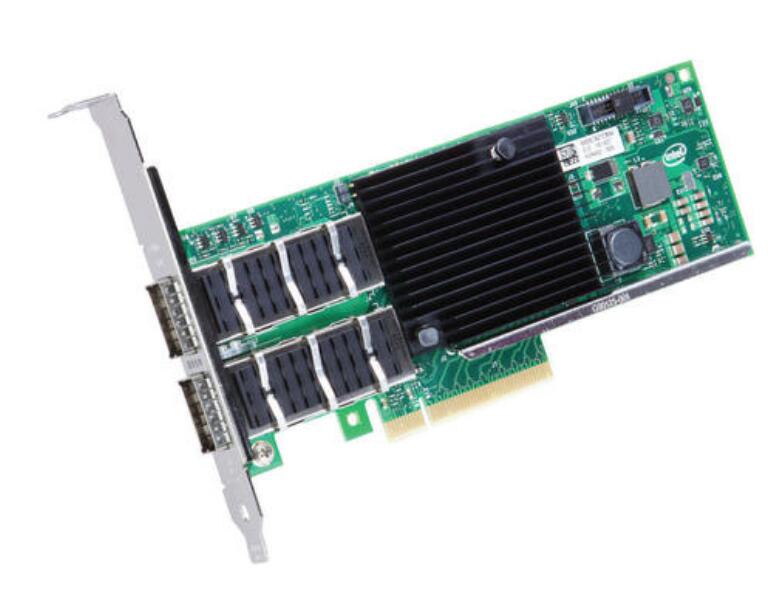
The following image shows a 3D video card by Asus, model Extreme AX800XT PE/2DHTV, that uses the PCI Express bus 16X: Already the following figure shows in a different motherboard PCI Express slots. The snap white is a PCI Express 16X, while the slot black and the smaller is a slot PCI-Express 1X:
Ending
Before closing this text, a note relatively important: although it is common – including in sites computer – treat technology PCI Express as a bus, that name it is not necessarily correct. On a bus, means be possible the connection of several devices simultaneously. This means that such devices share the same communication medium. With PCI Express, however, this is not the case, since the connection occurs between two devices, point-to-point. In other words, each PCI Express slot uses a unique path to communicate with the motherboard chipset.
But what really matters is that the PCI Express standard has been able to cater to the evolution of technologies the use of computational, especially in the segments graphics, which require each time more of your hardware resources. And it comes more out there: the group SIG-PCI intends to launch in 2009, the version 3.0 of the PCI Express. Is wait to take advantage of 🙂